
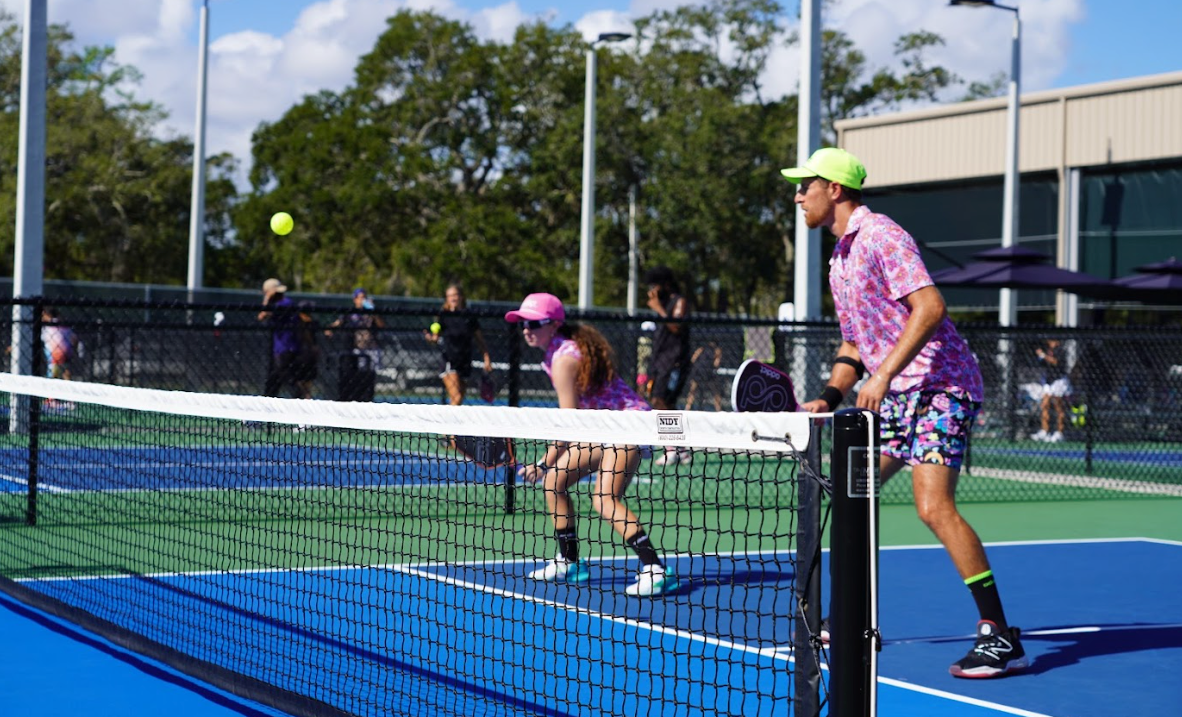
A useless dink in pickleball is actually a present shot out of your opponent. This information breaks down the best way to determine a useless dink and precisely the best way to assault it each single time.
Pickleball useless dinks are the present photographs that separate winners from informal gamers, and you would be stunned what number of amateurs nonetheless allow them to bounce passively.
The annoyed rally, the floating ball that sits up, the second you hesitate and hit one other tender dink again, all of it comes again to not recognizing a useless dink when it occurs.
Miss that learn and also you’re leaving vital factors on the desk, arguing with your self about why you did not go for the assault.
This is the excellent news: attacking a useless dink is simple when you see it as a sign, not simply one other shot.
If you wish to win extra pickleball video games in 2026, mastering this one learn is without doubt one of the quickest methods to get there.
Love pickleball? Then you definitely’ll love our free publication. We ship the most recent information, ideas, and highlights at no cost every week.
What Is a Useless Dink in Pickleball?
A useless dink in pickleball is a dink shot that sits increased than standard, has little to no spin, and offers you time and area to assault.
It is a passive shot by your opponent that screams “hit me,” primarily a present shot you need to assault each single time.
Whenever you see a useless dink your opponent hits, the worst factor you are able to do is hit one other passive dink again. As a substitute, it’s essential to immediately deploy one among three attacking choices: aggressive dink, speed-up, or offensive lob.
Understanding what’s a useless dink in pickleball begins with recognizing that passivity on the kitchen line is a selection you are actively making, and it is costing you factors.
Prime instructing professionals, together with web sensation Kyle Koszuta, name this particular ball a useless dink for this precise motive.
In case you are letting these balls bounce and casually returning them with a tender, passive shot, you’re leaving vital factors on the desk.
The 6 important pickleball photographs to grasp for 2026 embody this precise state of affairs, recognizing the useless ball and changing it.
Based mostly on deep analysis into pickleball technique and skilled instructing, right here is the whole information to understanding what’s a useless dink in pickleball and the best way to systematically assault it each single time.
Anatomy of a Useless Dink
To grasp the kitchen line, it’s essential to first perceive the anatomy of a weak shot.
A useless dink is solely a dink that sits excessive, provides you time and area, or principally screams “hit me.”
It’s an unforced, passive error that palms tactical management over to you if you understand how to learn it.
What Makes a Dink “Useless”? Key Traits
The logic right here is simple, but it’s often ignored by leisure gamers.
In leisure pickleball, gamers typically get caught in a hypnotic rhythm, hitting tender dinks forwards and backwards indefinitely.
The 12 drills it’s good to play your finest pickleball in 2026 had been particularly designed to interrupt gamers out of this passive behavior sample.
As Kyle Koszuta states:
“If the ball sits excessive or your opponent provides you time and area to decide, it’s good to do one thing with it. Both velocity it up or take an aggressive dink.”
💡
Why Useless Dinks Are Harmful (When You Hit Them)
Understanding the useless dink is a two-way road.
When you wish to hunt them down when your opponent hits them, it’s essential to get rid of them from your individual defensive arsenal.
They’re extensively thought of the #1 dink it’s essential to keep away from in aggressive play for a number of distinct causes:
Key Strategic Rule: The deeper your useless dink will get towards the opponent’s kitchen line, the extra harmful it turns into for you.
A deep useless dink provides your opponents most leverage and far more geometric choices to hurry the ball up cleanly.
Holding Your Dinks: The Deadliest Kitchen Technique You’re Not Utilizing Sufficient
Holding a dink forces your opponent to organize for a slew of potentialities, and that split-second delay is the place you acquire the higher hand
The Trendy Pickleball Mindset: Aggression Wins
The panorama of aggressive pickleball has developed dramatically.
The times of enjoying purely passive, “stay-in-the-point” pickleball, the place you merely hold the ball in play and wait to your opponent to hit the online, are gone.
Trendy pickleball is totally about making use of stress, exerting your will on the courtroom, and forcing opponents into uncomfortable positions.
Whenever you get a useless dink in pickleball, attacking that ball is non-negotiable.
In response to fashionable pickleball’s 4 key methods to successful in 2026, transitioning from passive to aggressive ball-striking is the one most impactful shift a creating participant could make.
The Useless Dink Breakthrough Blueprint
The aim of an assault is not all the time to finish the purpose instantly.
Typically it’s merely about placing your opponent off steadiness and making them react reasonably than act.
Should you do not capitalize on that floating alternative straight away, you won’t get one other appear like it for the remainder of the purpose.
The 4th Shot Mindset: Cease Inviting Your Opponents to the Kitchen Line
Cease enjoying the fourth shot prefer it’s a formality. As a substitute, acknowledge it for what it’s: your final probability to use stress earlier than your opponent will get an opportunity to assault.

2026 Pickleball Traits: Useless Dink Assault Evolution
The best way execs assault useless dinks has developed considerably in 2026. This is what’s altering:
What Is a Useless Dink in Pickleball In comparison with a Push Dink? (2025-2026 Shift)
In 2025-2026, the terminology has shifted.
What was as soon as referred to as an “aggressive dink” is now extra generally referred to as a push dink, a extra offensive dink shot that places sustained stress on opponents.
Push dink traits:
- Makes use of topspin to push opponents again
- Utilized with managed tempo crosscourt
- Creates offense whereas staying within the tender recreation
Carry dink traits (defensive):
- Used when out of place
- Delicate shot to reset the purpose
- Defensive necessity, not offensive weapon
As Richard Livornese Jr. explains in 2026: “Normally, topspin equals offense, slice equals protection.”
Whereas topspin dinks are used to use stress and push opponents again, slice dinks are extra about management and shopping for time.
The causes skilled pickleball gamers deserted the slice shot in 2025 reinforce precisely this evolution, and understanding it provides you a decisive edge over gamers nonetheless caught in defensive habits.
Useless Dink Response Drill: New for 2026
A useless dink drill was added to the official six important pickleball drills in 2026:
Setup:
- Begin by dinking one, two, then deliberately give your associate a useless, tender dink
- Get ready to defend, anticipating the assault
Goal:
- Trains you to react immediately when opponent provides you a useless ball
- Builds muscle reminiscence for the three assault choices
- Trains defensive positioning while you’re the one hitting the useless dink
This drill is now thought of important for gamers at 3.5+ ability ranges. Need a full drill library?
The 12 drills it’s good to play your finest pickleball in 2026 covers this and each different key coaching routine in a single place.
What Is a Useless Dink? The Present Shot You Ought to Be Attacking Each Time
Consider a useless dink like a present. Your opponent both made a mistake or gave you a gap. The query is: what are you going to do with it?
Easy methods to Assault a Useless Dink Each Time: 3 Choices
Whenever you obtain a useless dink in pickleball, absolutely the worst factor you are able to do is hit one other passive, useless dink again.
Doing so fully wastes the opening your opponent handed you. As a substitute, you need to immediately deploy one among these three attacking choices.
Possibility 1: Hit an Aggressive Offensive Dink
- The Purpose: Make your opponent transfer wherever they’re at the moment leaning.
- The Goal: Hit the ball sharply out to their forehand close to the sideline, or onerous towards the center to power an uncomfortable, jammed backhand.
- The Technique: Pressure them to maneuver laterally (left-to-right) and dynamically (up-and-back) utilizing a calculated mixture of deep and shallow placement.
- Professional Hack: Add spin. Manipulate your paddle face to make use of totally different spins so they don’t obtain the identical look twice. Understanding the distinction between aggressive vs. defensive dinking is vital to mastering this selection. As famous within the 5 pickleball photographs it’s essential to grasp earlier than 2026, spin variation is the separator between good dinking and elite dinking.
Possibility 2: Velocity Up the Ball with Tempo
- The Purpose: Jam your opponent on their dominant aspect and power a extremely restricted “rooster wing” defensive posture.
- The Approach: Drive by means of the ball and add a bit of topspin to make sure it dips and stays throughout the baseline.
- The Goal: Intention instantly on the participant positioned in entrance of you, particularly concentrating on their dominant hip or shoulder.
- Why it Works: As a result of useless dinks naturally sit excessive, they supply the final word strike zone for safely including tempo with out hitting the online tape. This targets the “rooster wing” zone, one of the vital troublesome areas for opponents to deal with. The speed-up off a floating dink is without doubt one of the key weapons highlighted within the 6 important pickleball photographs to grasp for 2026.
Possibility 3: Hit an Offensive Lob from the Non-Volley Zone (NVZ)
- The Purpose: Clear your opponents’ heads totally, power them out of the kitchen, and create huge structural openings on the courtroom.
- Key Components: Precision is every part; each optimum peak and deep baseline depth are required.
- The Approach: Brush up closely on the ball to use heavy topspin. This causes the shot to “run away” out of your opponents as they chase it backward towards the baseline.
- Why it Works: Since a useless dink doesn’t press or rush you, you’re arrange with excellent, secure steadiness to execute this high-accuracy shot. An offensive lob from the NVZ is the final word disruption software. The 2026 guidelines adjustments it’s good to know additionally make clear a number of NVZ conditions the place this lob turns into much more tactically viable.
Easy methods to Assault Useless Dinks in Pickleball
Figuring out when and the best way to assault useless dinks in pickleball is the quickest method to improve your kitchen recreation. This information breaks down precisely the best way to determine attackable dinks and execute the fitting shot each time.
Fast Reference: Assault Resolution Tree
That will help you make split-second choices on the kitchen line, use this strategic resolution tree based mostly on the precise placement of the incoming useless dink:
The Energy of Triadic Risk: Psychological Compounding
Whenever you grasp all three attacking variations, the aggressive dink, the speed-up, and the offensive NVZ lob, you unlock a devastating psychological benefit.
When an opponent has to actively fear about all three choices concurrently, it turns into practically unattainable for them to learn your paddle face or anticipate your subsequent transfer.
By persistently and ruthlessly attacking useless dinks, you ship an express psychological message: You’ll pay for each mistake made at this internet.
Over the course of a match, this aggressive mentality compounds closely:
The 4-step system to win extra pickleball video games in 2026 reinforces this precise psychological framework, sustained aggression is a system, not a temper.
Cease neutralizing the items your opponents provide you with.
The following time you see a useless dink, step up, select your weapon from the three choices above, and take full management of the courtroom.
Psychological Warfare: What Elite 6.0 Pickleball Gamers Assume Throughout Each Dink
What separates good from nice in pickleball is the split-second psychological shift that occurs the second the ball leaves the paddle
Key Takeaways
- A useless dink in pickleball is a dink shot with little to no spin that sits increased than standard, supplying you with time and area to assault. It is an unforced error your opponent makes that palms tactical management to you.
- The #1 dink to keep away from in aggressive play is the useless dink you hit your self, as a result of it provides opponents zero stress, ample time to hurry up, and absolute courtroom management.
- Whenever you obtain a useless dink, assault utilizing one among three choices: aggressive offensive dink, speed-up with tempo, or offensive lob from the NVZ.
- The fashionable 2026 mindset has shifted terminology: “push dinks” (topspin, offensive) vs. “elevate dinks” (slice, defensive), with topspin equaling offense.
- Grasp all three attacking variations to unlock the triadic menace, a psychological benefit the place opponents cannot learn your paddle face or anticipate your subsequent transfer.
💡
Incessantly Requested Questions
What Precisely Is a Useless Dink in Pickleball?
A useless dink in pickleball is a dink shot with little to no spin that sits increased than standard, supplying you with time and area to assault. It is primarily an unforced error by your opponent that palms tactical management to you if you understand how to learn it.
Ought to I Hit a Useless Dink Again as One other Dink?
No, hitting one other passive dink again is absolutely the worst response to receiving a useless dink. This fully wastes the opening your opponent handed you, and it’s essential to as a substitute assault utilizing one among three choices: aggressive dink, speed-up, or offensive lob.
What Are the Three Methods to Assault a Useless Dink in Pickleball?
The three confirmed assault choices while you obtain a useless dink are: hit an aggressive offensive dink to maneuver your opponent laterally, velocity it up with tempo to jam their dominant aspect and power a rooster wing response, and hit an offensive lob from the NVZ to clear their heads and power them out of the kitchen. Every possibility creates a special drawback to your opponent, which is strictly why mastering all three is extra highly effective than counting on only one.
Why Are Useless Dinks Harmful After I Hit Them?
Useless dinks are the primary dink to get rid of out of your recreation as a result of they provide opponents zero stress, present ample time and area to hurry up, and hand absolute courtroom management to your opponent. The deeper your useless dink lands towards their kitchen line, the extra geometric assault choices you hand them.
How Does the Useless Dink Match Into Trendy Pickleball Technique in 2026?
In 2026, fashionable pickleball technique calls for that each useless dink be handled as a non-negotiable assault alternative. The evolution of push dinks versus elevate dinks means gamers at the moment are educated to acknowledge ball peak as an automated set off for transitioning from passive protection to managed aggression.
What Is the “Hen Wing” Zone and Why Does It Matter?
The rooster wing zone is the paddle-side shoulder and hip space of your opponent, the place they wrestle to resolve between forehand and backhand, forcing an ungainly restricted return posture. That is the first goal zone for speed-up assaults on useless dinks as a result of even a well-prepared opponent has nearly no clear response from that place.
Able to dominate useless dinks at your subsequent match? Begin implementing these three assault choices at the moment. The gamers who capitalize on each useless dink pickleball alternative aren’t simply gifted, they’re aggressive. Now you understand how to be, too.
