
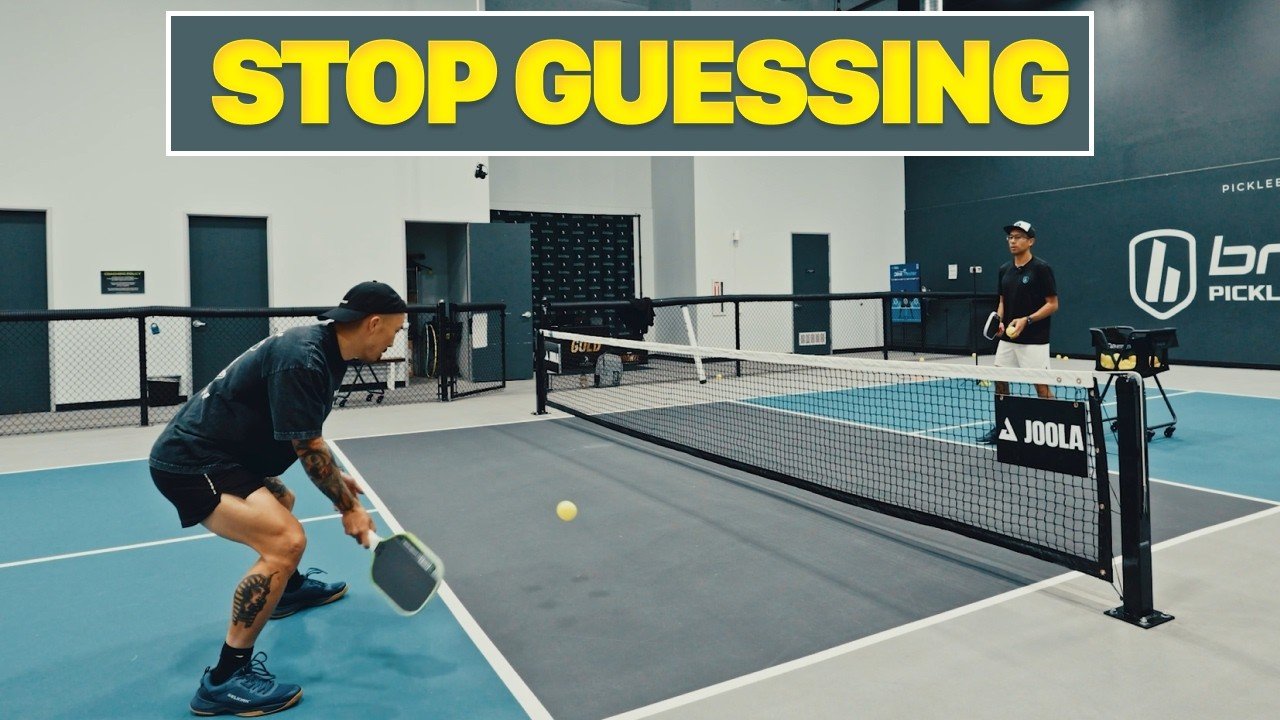
The kitchen dink is the inspiration of contemporary pickleball technique. Grasp depth management, goal placement, and counter-anticipation to dominate on the web.
The kitchen dink is not simply one other shot in your pickleball arsenal. It is the inspiration that separates informal gamers from aggressive ones.
In response to Jordan Briones, a revered pickleball coach featured on the Constructing Pickleball channel, the way in which you execute your dinks instantly determines whether or not you are establishing profitable assaults or handing your opponents simple alternatives.
Love pickleball? Then you definitely’ll love our free publication. We ship the newest information, ideas, and highlights totally free every week.
Why Your Kitchen Dink Depth Issues Extra Than You Assume
Here is the factor: most gamers assume a kitchen dink is nearly getting the ball over the online. That is solely half the battle.
The actual talent lies in controlling depth, and Briones breaks this down with laser precision.
Whenever you hit a shallow dink, your opponent will get to roll you all day. They’re sitting on the web, ready for that mushy ball to drift up, and all of a sudden they’re attacking.
However whenever you push your dink deeper into the kitchen, you drive them to decide.
They both must volley from additional again or shuffle away from the online. That is whenever you achieve management.
Depth management is every part within the kitchen.
Briones emphasizes that at larger ranges of play, execs aren’t aiming for a single spot each time. They’re working inside a zone.
The purpose is to maintain the ball deep sufficient that your opponent cannot assault, however mushy sufficient that it stays in play.
The Two Goal Zones Each Participant Ought to Know
When Briones works with gamers on their kitchen dink approach, he makes use of a easy visible instrument: two goal zones on the courtroom.
Understanding these zones transforms the way you method each dink.
- The primary goal is the within foot of your opponent. That is the crosscourt dink that pulls them barely towards the center of the courtroom.
- The second goal is the nook of the kitchen, pushing them towards the sideline. These aren’t random spots. They’re strategically chosen to create strain and restrict attacking choices.
What makes this method so efficient is that it forces your opponent to select. In the event that they’re pulled inside, the surface is open.
In the event that they’re pushed large, the center turns into susceptible. Your kitchen dink turns into a setup instrument slightly than only a defensive shot.
Briones notes that many intermediate gamers purpose too conservatively. They’re nervous about lacking, in order that they maintain the ball shallow.
However in a super world, particularly whenever you’re practising at a excessive stage, you wish to be hitting these deeper targets persistently.
The management comes with repetition and confidence.
💡
What Separates Good Dinks From Nice Ones
The distinction between a great kitchen dink and a fantastic one usually comes down to 1 factor: swing velocity. That is the place most gamers get it fallacious.
Whenever you’re moved out of place or pulled large, your intuition is to swing more durable. You are attempting to compensate for being off-balance.
However that is precisely when it is advisable decelerate. Briones makes use of an MMA analogy to elucidate this: you may punch somebody exhausting or mushy.
The distinction is velocity. Similar idea applies to your dink.
A kitchen dink with managed swing velocity provides you two benefits.
- First, it buys you time to get well and reset your place.
- Second, it permits you to management the depth exactly.
Whenever you’re swinging quick, the ball both goes too far or pops up.
Whenever you gradual it down, you may place it precisely the place you need it.
The very best gamers have educated their defensive dinks so totally that they’ll hit them from any place.
Whether or not they’re shuffled out large or caught off-guard, they’ll nonetheless execute a mushy, deep dink that retains them within the level.
Grasp the Pickleball Dink: 5 Important Photographs
Your pickleball dink sport is both profitable you factors or gifting them away. Grasp these 5 important pickleball dink photographs and be taught precisely when to deploy each based mostly on the ball you obtain.
Studying Your Opponent’s Dink Patterns
Here is one thing that separates execs from everybody else: they don’t seem to be simply hitting dinks. They’re studying patterns and anticipating what comes subsequent.
Whenever you hit a kitchen dink to a particular location, your opponent’s response is considerably predictable.
In case you dink to their backhand aspect and so they’re compelled to flick, the ball is probably going coming again to the identical aspect or straight at your physique.
In case you pull them large with a crosscourt dink, they’re in all probability going to hurry up down the road or go center.
Briones emphasizes that execs aren’t pondering 10 or 20 photographs forward like some individuals consider.
They’re pondering one or two photographs forward, however they’ve educated these patterns so totally that they know the place the ball is coming again.
That is why kitchen dink observe is not nearly hitting mushy photographs.
It is about understanding the geometry of the courtroom and the physics of how your opponent will reply.
Whenever you provoke with a dink, you must take into consideration the counter. What is the almost definitely response? The place do you have to place your self?
This psychological sport is what separates aggressive gamers from informal ones.
9 Energy Paddles that Are Wonderful at Dinking
Based mostly on a novel mix of lab-tested energy and consistency metrics, these paddles are confirmed to present you an edge in all three zones of the courtroom.

The Lifeless Dink Downside (And How one can Repair It)
You’ve got in all probability hit what Briones calls a “useless dink.
“ It is that shot that sits up just a bit bit, pulls your opponent out barely, however does not actually put strain on them. It is gradual, it is mushy, and it is harmful.
Whenever you hit a useless kitchen dink, your opponent has time to cowl each the center and the sideline.
They’ll velocity up, they’ll flick, they’ll do no matter they need. You’ve got basically given them the purpose.
The repair is knowing what creates a useless dink within the first place.
Normally, it is certainly one of two issues: you are swinging too quick, otherwise you’re not controlling your depth correctly.
Briones works with gamers to decelerate their swing and deal with protecting the ball in a particular zone. It isn’t about hitting it softer. It is about hitting it with intention.
A very good kitchen dink forces your opponent to decide instantly.
They can not sit again and wait. They must decide to a path, and that is whenever you’ve acquired them.
Keep away from These 3 Lethal Errors to Grasp Aggressive Dinking
The aggressive dink isn’t about overpowering your opponent. It’s about creating strain by means of placement, utilizing deception to maintain them guessing, and understanding when to assault versus when to reset
You’ll be able to have good approach, but when your footwork is horrible, your kitchen dink will undergo. That is the place a number of gamers miss the mark.
Whenever you’re pulled out large, it is advisable shuffle explosively. Your stance issues. In case you’re standing too slim, you may’t cowl distance.
In case you’re in a correct athletic stance, large and balanced, you may shuffle out and nonetheless execute a top quality dink.
Briones demonstrates this by having gamers begin in a slim stance and attempt to shuffle. They’ll barely transfer.
Then he has them widen their stance, and all of a sudden they’re overlaying twice the gap. It isn’t magic. It is physics.
The kitchen dink requires you to be in place to hit it. Which means your footwork has to get you there first.
Whether or not it is a lateral shuffle for a shallow ball or an angle shuffle step for a deeper ball, your toes decide whether or not you may execute the shot you need.
Pickleball Load Step: The Footwork Secret Execs Use
The pickleball load step is the inspiration of contemporary footwork that separates high-level gamers from amateurs. Grasp this important motion and rework your positioning, stability, and shot execution.
When to Assault Off Your Kitchen Dink
Not each kitchen dink is supposed to be defensive. Typically, you are establishing an assault.
The bottom line is understanding ball peak. If the dink is comparatively low, you are in all probability going to dink once more or do one thing defensive.
But when it sits up barely, that is your alternative. Briones talks about having “one and twos” whenever you’re on the web.
Your one is the hen wing assault when your opponent is pulled. Your two is the center assault once they’re in a impartial place.
However this is the factor: ball peak modifications every part. If the ball is low, you may’t hit your one or two.
It’s a must to regulate your resolution based mostly on what you are truly seeing. That is why kitchen dink observe is not nearly hitting the identical shot again and again.
It is about creating the flexibility to learn the ball and make split-second choices.
Whenever you do assault off a dink, you must take into consideration the counter. The place is the ball coming again? What’s your subsequent transfer?
That is the distinction between a participant who can hit an assault and a participant who can execute an assault that truly wins the purpose.
Superior Pickleball Attacking Technique on the Kitchen Line
There are solely 3 ways to assault on the kitchen line in pickleball. From velocity ups off the bounce to reaching in for air assaults, right here’s what separates the winners from the remainder.
The Psychological Sport of Kitchen Dink Technique
Here is one thing that does not get talked about sufficient: the psychological aspect of the kitchen dink.
Whenever you’re in a rally and also you’re hitting dinks, you are not simply executing a shot.
You are enjoying chess.
You are attempting to arrange a state of affairs the place your opponent makes a mistake otherwise you get a chance to assault. Each dink has a objective.
Briones talks about making your opponent earn the bounce. If they do not earn it, you are attacking. In the event that they do earn it, you are establishing the following play.
This mindset modifications the way you method each single dink. You are not simply attempting to maintain the ball in play. You are attempting to create strain and alternatives.
The very best kitchen dink gamers have educated this so totally that it turns into computerized. They are not fascinated about it consciously.
They’re simply executing based mostly on patterns they’ve practiced 1000’s of occasions.
💡
Often Requested Questions
What is the perfect depth for a kitchen dink?
The best depth for a kitchen dink is deep sufficient that your opponent cannot assault, however mushy sufficient that it stays in play. At larger ranges, execs purpose for a zone close to the again of the kitchen, roughly 2 to three toes from the baseline. This forces your opponent to both volley from additional again or shuffle away from the online, supplying you with management of the purpose.
How do I cease hitting useless dinks?
Lifeless dinks often consequence from swinging too quick or not controlling your depth. Decelerate your swing velocity and deal with protecting the ball in a particular zone. Follow hitting dinks from totally different courtroom positions so that you develop consistency. The bottom line is intention, not simply softness.
Why is footwork so vital for the kitchen dink?
Footwork will get you into place to hit the dink you need. In case you’re in a slim stance, you may’t shuffle far sufficient to succeed in large balls. A correct athletic stance along with your toes large means that you can cowl extra distance and execute high quality dinks from anyplace on the courtroom.
Ought to I all the time dink deep, or are there occasions to dink shallow?
There are occasions for each. Deep dinks put strain in your opponent and arrange assaults. Shallow dinks will be helpful whenever you’re on protection and nervous about backhand flicks. The bottom line is understanding when every is suitable and executing with intention slightly than hitting shallow dinks out of worry.
How do I do know when to assault off a dink?
Ball peak is the first indicator. If the dink sits up barely, you might have an attacking alternative. If it is low, you are in all probability going to dink once more. Develop the flexibility to learn the ball rapidly and regulate your resolution based mostly on what you are seeing, not on a predetermined plan.
