
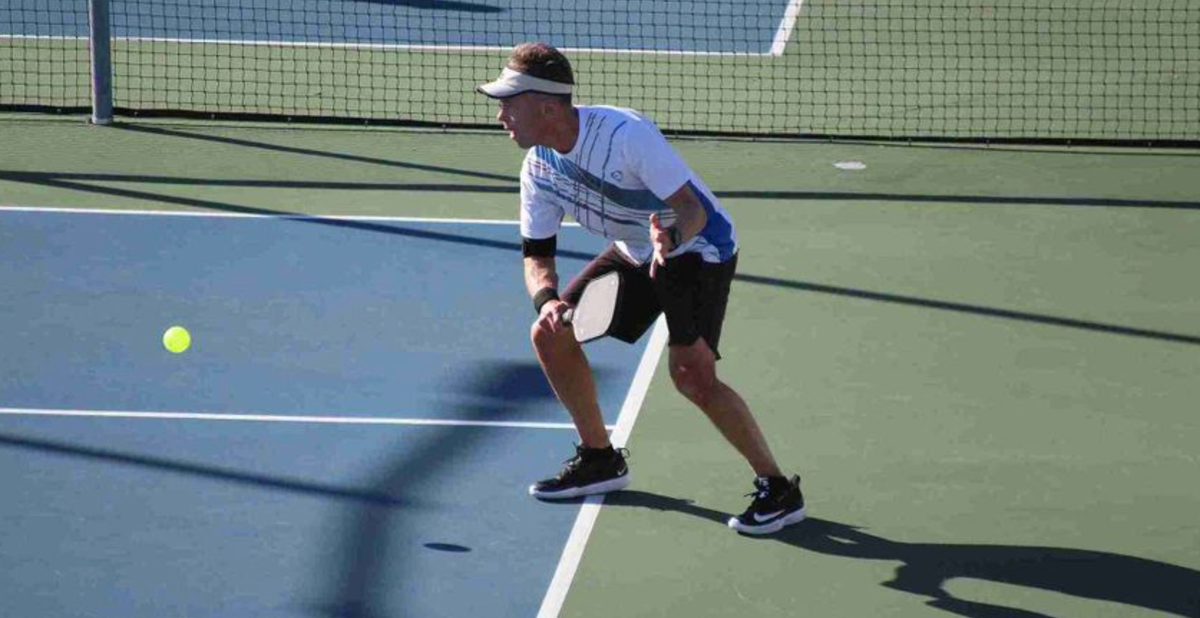
Restoration place after assault pickleball technique is what separates gamers who win one rally from gamers who win the entire recreation. This is precisely methods to get again in place after you pull the set off, keep balanced, and maintain the strain on.
Your restoration place after assault pickleball conditions is the shot no person talks about.
Everybody obsesses over the assault itself, the speed-up, the roll, the punch.
However what occurs the second after you pull the set off? That is the place most factors are literally misplaced.
You assault. The ball comes again. You are out of place, your weight is ahead, and also you eat a counterattack at your hip. Sound acquainted?
Fixing this isn’t difficult. But it surely does require intention, and it begins earlier than the ball even leaves your paddle.
Love pickleball? Then you definately’ll love our free e-newsletter. We ship the most recent information, ideas, and highlights free of charge every week.
Why Restoration Place After Assault Pickleball Issues Extra Than the Assault Itself
Restoration place after assault pickleball is not a secondary ability. It is the ability. This is the factor: most 3.5-to-4.0 gamers assault fairly nicely.
The separation at 4.5 and above is nearly completely about what occurs subsequent.
Take into consideration the professional rallies you’ve got watched. When Ben Johns accelerates, his paddle would not comply with the ball to the online.
It snaps again to a prepared place, chest excessive, weight balanced, eyes already scanning the return. He is constructed a response plan into the assault itself.
That is attacking technique at its highest stage: intention on the best way in and a reset plan on the best way out.
The physics are easy. Whenever you assault, your momentum goes ahead and downward. Your weight follows your swing.
In case your opponent blocks or redirects that assault, particularly cross-court, your physique is already touring the mistaken course.
You are chasing the subsequent ball earlier than you’ve got completed the present one.
The repair is not to assault much less. It is to assault smarter and get well sooner.
These are the 2 sides of the identical coin, and shot choice all the time has to account for each.
What Does “Restoration Place” Really Imply?
Earlier than we get into mechanics, let’s outline the time period.
Restoration place in pickleball means returning your physique to a impartial, balanced, prepared state after executing an aggressive shot.
It’s not the identical as retreating. You are not backing off, you are re-centering.
The core parts of a correct restoration place:
- Ft shoulder-width aside, staggered barely in the event you’re transferring laterally
- Weight on the balls of your ft, not your heels
- Knees barely bent, you need to have the ability to transfer in any course inside half a second
- Paddle up and in entrance, roughly chest to shoulder peak
- Eyes monitoring the ball and your opponent’s physique language concurrently
That final one is usually ignored. Most gamers watch solely the ball after they assault.
However studying your opponent’s shoulder and hip rotation tells you the place the counterattack goes earlier than it occurs.
Mix that with strong footwork fundamentals and you may cease chasing balls you must have already been transferring to.
💡
How one can Get well Courtroom Place After Attacking in Pickleball: The Three-Section Framework
Restoration place after assault pickleball breaks down into three phases that occur in roughly two seconds: assault, reload, and reposition.
Most gamers solely take into consideration section one.
Section 1: The Assault (and the Setup for Restoration)
Counterintuitively, a cleaner restoration begins with a greater assault setup. Should you’re reaching, off-balance, or swinging from under your waist, your restoration is already compromised earlier than it begins. High quality assaults come from a secure base. Which means your cut up step has already loaded your weight appropriately, you are at or above internet peak for contact, and your paddle path is managed, not flailing.
Take a look at how shoulder peak on contact impacts your total swing chain. An assault from too low forces your physique right into a compensation that bleeds straight into your restoration. Getting the proper contact level is step one among getting again in place.
Section 2: The Reload (Speedy Reset After Contact)
That is the place the work occurs. The moment your paddle makes contact on an assault, cease your swing’s follow-through from dragging your complete physique ahead. Consider it like a boxer who throws a jab, the hand snaps again to protect place. It would not comply with the fist to the goal.
Virtually, this implies:
- Cease the follow-through at contact. Do not let your arm swing previous your physique’s midline.
- Drive your weight again by way of your heels briefly to counteract the ahead momentum of the swing.
- Get your paddle again to prepared place, up in entrance, not hanging at your aspect.
This all occurs in beneath half a second. If it feels mechanical at first, that is regular. Construct it in drills, and it turns into computerized in matches.
Drills designed round shot creation and restoration are the quickest approach to hardwire this behavior.
Section 3: Reposition (Cowl the Most Doubtless Counterattack)
This is the place courtroom technique intersects with biomechanics. After attacking, your opponent has three reasonable choices: they will counterattack at your physique, redirect cross-court, or reset comfortable into the kitchen. Your repositioning ought to account for the most definitely of these based mostly on the place you attacked and the place they’re standing.
- Should you attacked down the road: Slide barely towards the center of your half of the courtroom. A cross-court redirect is now their highest-percentage play.
- Should you attacked cross-court: Maintain or get well barely towards the center. A down-the-line counter is their pure response.
- Should you attacked at their physique: Keep heart. Their return choices are restricted, so that you personal the subsequent ball in the event you’re balanced.
How one can Cease Lunging in Pickleball: Repair Your Courtroom Place
If you wish to cease lunging in pickleball, the true repair isn’t sooner palms, it’s higher courtroom place earlier than the ball arrives. This information breaks down precisely why you lunge and methods to appropriate it with footwork changes you’ll be able to apply instantly.

The Transition Zone Downside: Why Your Restoration Will get Sophisticated
Should you’re attacking from the transition zone, that no-man’s-land between the baseline and the kitchen line, your restoration place after an assault turns into much more essential.
You are not on the internet but. You are not safely again. Each assault you try right here carries actual threat.
That is coated in depth in mid-court pickleball ideas, however the quick model is: attacking from the transition zone and not using a restoration plan is without doubt one of the commonest errors on the 3.5-to-4.0 stage.
You assault, you are out of place, and your opponent drops the ball simply over the online for an uncontested winner.
The precept that fixes this: your restoration place determines whether or not you will get to the kitchen.
A compact, managed assault with quick restoration helps you to proceed your transfer ahead to the NVZ line.
A sloppy, over-committed assault pins you in no man’s land.
Speaking transitions is the piece most coaches skip. It isn’t glamorous. But it surely’s the place the sport is gained and misplaced at each stage above 3.5.
Win the Pickleball Transition Zone: Reset Shot Information
The pickleball transition zone is the place most gamers wrestle, however mastering it separates newbies from aggressive gamers. Study the reset shot approach that offers you management of the center courtroom.
How Does Restoration Differ in Singles vs. Doubles?
This query comes up continuously, and the reply issues. In doubles, your restoration place after attacking is a group accountability.
Your associate’s positioning impacts the place it’s essential to be simply as a lot as your personal motion does.
Should you assault from the left aspect and your opponent redirects down the proper sideline, your associate must be masking that lane when you get well heart.
In singles, you personal your entire courtroom, so restoration positioning is much more demanding. It’s essential assault after which transfer, not simply reset in place.
The usual precept in singles technique is to return to roughly the middle of the courtroom’s baseline after any aggressive shot, then advance because the ball’s tempo offers you time.
The stagger idea applies immediately right here in doubles.
You and your associate ought to be staggered based mostly on ball place, the participant nearer to the place the ball is coming from takes barely extra of the courtroom.
Perceive this and your post-attack doubles protection will look fully totally different.
Blended Doubles Technique: Rachel Rohrabacher’s Information
Rachel Rohrabacher breaks down the basics of blended doubles technique in a masterclass with Kyle Koszuta. From understanding every participant’s function to studying your opponent’s motion, this information covers all the things it’s essential to elevate your blended recreation.
When Ought to You Reset As a substitute of Recovering?
Truthfully, generally you do not get well in any respect, you neutralize.
In case your assault did not go precisely the place you wished and also you sense a tough counterattack coming, the neatest transfer is to cease excited about restoration and begin excited about survival.
Which means:
- Drop your heart of gravity quick. Get low for the incoming tempo.
- Shorten your swing to a block. Do not attempt to counter a counter with a full swing.
- Use the reset, a comfortable, absorbing block that drops the ball into the kitchen and restarts the dink rally.
That is the distinction between methods to change into unattackable and simply surviving rallies. One of the best gamers do not panic after a failed assault.
They’ve a reset hierarchy: if the counterattack is manageable, re-engage aggressively. If it is quick and well-placed, block or reset and reset the purpose.
A distinct type of reset covers the nuances of blocking beneath strain nicely. The important thing mindset shift is that this: a reset just isn’t failure.
It is a tactical retreat that buys you the subsequent assault on higher phrases.
Determination Matrix: When to Assault or Reset in Pickleball
Pickleball is admittedly all about two key elements: your courtroom positioning and the peak of the ball. This matrix decodes the sport for you.
The Most Widespread Restoration Errors After Attacking
Understanding what not to do locks within the ideas sooner. These are the errors exhibiting up at each rec-to-competitive stage:
- 1. Standing tall after attacking. Your heart of gravity must drop after contact, not rise. Standing tall leaves you weak to exhausting balls on the hip and gradual to lateral motion.
- 2. Watching the place your ball went as an alternative of watching your opponent. The ball is irrelevant as soon as it is left your paddle. Snap your eyes instantly to your opponent’s contact zone.
- 3. Letting the paddle drop under waist peak. Put up-attack, your paddle drifts down. It ought to be again as much as chest peak inside a half-second. A low paddle cannot shield you from a body-attack counter.
- 4. Over-committing to a follow-through. The identical factor that makes your assault look highly effective can destroy your restoration. Compact swings get well sooner. Full, looping swings are slower to reset.
- 5. Attacking while you’re already out of place. The mistake most gamers do not realize they’re making is launching assaults earlier than their ft are set. Assault from a secure base or do not assault in any respect.
5 Pickleball Errors Conserving You Caught Beneath 4.0
Intermediate pickleball gamers usually hit a plateau across the 3.0-4.0 stage, not due to lack of effort, however due to repeated habits. A brand new breakdown identifies 5 particular pickleball errors that restrict development and explains precisely methods to appropriate them.
Drills to Construct Restoration Place After Assault Pickleball Habits
You possibly can examine this all day, however the physique learns motion by way of repetition. These drills construct the restoration behavior:
- Assault-and-Get well Drill: Feed your self a mid-court ball (from a ball machine or a associate). Velocity as much as your goal, then instantly snap again to prepared place. Have your associate instantly feed the subsequent ball, forcing you to really be in restoration place, not simply give it some thought.
- Block the Counter Drill: Your associate initiates a speed-up. You assault again. They instantly block or redirect. Your job is to be in place to deal with that second ball. This replicates the true in-game sequence at tempo.
- Three-Ball Sequence: Assault, block the counter, reset to the kitchen. Operating this sequence till it feels seamless builds the total attack-to-recovery-to-reset chain that wins actual factors. Join this to 4th shot courtroom protection rules in doubles for a whole apply plan.
- Shadow Footwork: No ball. Simply apply the assault movement adopted instantly by a two-step lateral shuffle again to heart place. Pickleball footwork patterns really feel awkward till they’re computerized. Get 100 reps of the motion earlier than you ask your mind to handle it mid-rally.
5 Pickleball Drills That Will Remodel Your Sport in 2026
5 easy but highly effective pickleball drills can fully reshape the way you play. These mechanics give attention to consistency, footwork, and positioning that will help you see instant outcomes on the courtroom.
Key Takeaways
- Restoration place after assault pickleball is the ignored half of each speed-up sequence.
- A strong assault begins with a secure base, and a foul assault setup leads on to a foul restoration.
- The three-phase framework: assault (managed), reload (snap paddle again, verify ahead momentum), reposition (cowl the most definitely counterattack lane).
- Within the transition zone, each assault should include a restoration plan, otherwise you’re handing factors away.
- Resetting just isn’t failure. It is a tactical alternative that resets the purpose on higher phrases.
- Construct restoration into your drilling, not simply your match play.
💡
Regularly Requested Questions
What’s restoration place in pickleball after attacking?
Restoration place after attacking in pickleball means returning your physique to a balanced, prepared state instantly after executing an aggressive shot. It includes ft shoulder-width aside, knees bent, weight on the balls of your ft, and your paddle again at chest peak, all inside a half-second of contact. The objective is to be ready to react to any counterattack, to not admire your final shot.
Why do I maintain getting countered after I pace up in pickleball?
The commonest trigger is a poor restoration place after the assault. Whenever you pace up, your weight drives ahead and your paddle follows by way of low. Should you do not actively reset your base and paddle peak, you are uncovered to redirects and physique pictures. Drilling the attack-and-recover sequence particularly, not simply the assault, will repair this sooner than anything.
How does restoration place differ in singles vs. doubles pickleball?
In doubles, restoration is a shared accountability. Your place after attacking ought to complement your associate’s, with one masking the counter and one holding the center. In singles, you personal the total courtroom, so restoration means transferring again towards heart courtroom after each assault. The urgency is greater in singles as a result of there isn’t any associate to cowl your gaps.
Ought to I reset or assault after my speed-up is blocked?
It will depend on the standard of the block. In case your opponent’s block is comfortable and uncontrolled, re-engage aggressively. If their block is clear, quick, or well-placed cross-court, change to a reset, take up the tempo, drop the ball into the kitchen, and restart the dink sequence on impartial phrases. Attempting to counter-attack from a poor place is without doubt one of the commonest unforced errors on the 4.0 stage.
How do I apply restoration place after attacking in pickleball?
The best strategy is devoted two-ball or three-ball drills. Assault, then have your associate instantly feed a second ball, forcing your restoration to be actual, not theoretical. Shadow footwork (assault movement adopted by lateral shuffle to heart) can also be underrated. Most gamers drill the assault in isolation, however it’s the pairing of assault and restoration that builds match-ready habits.
