
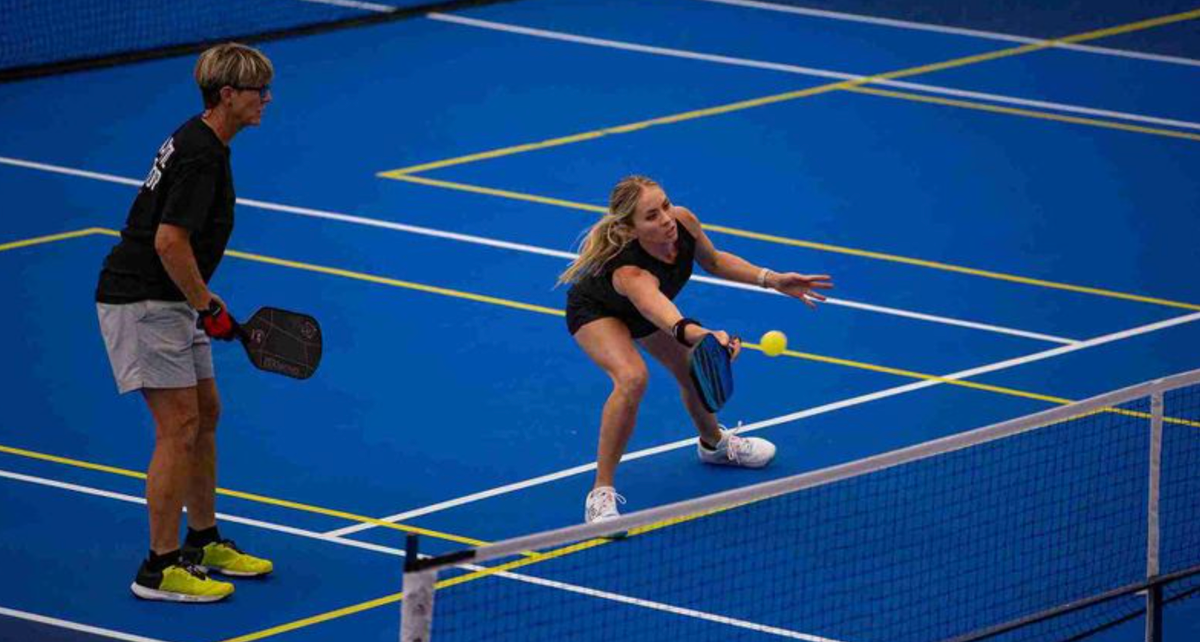
Pickleball doubles communication is the hidden variable that separates groups that grind out wins from groups that implode on large factors. Study the precise calls, alerts, and habits that preserve you and your companion transferring as one unit on the courtroom.
Pickleball doubles communication is the distinction between a partnership that appears like a well-oiled machine and one which falls aside the second a ball lands down the center.
Most gamers work on their dinks, their drops, their speed-up assaults. Only a few work on what they are saying, and after they say it.
That is a mistake. And it is a correctable one.
Analysis on crew coordination in racket sports activities persistently reveals that verbal and non-verbal communication between companions reduces unforced errors and improves positional protection (Journal of Sports activities Sciences, 2024).
In doubles pickleball, the place courtroom area is tight and selections occur in fractions of a second, that margin issues enormously.
Love pickleball? You then’ll love our free e-newsletter. We ship the most recent information, ideas, and highlights without spending a dime every week.
Why Pickleball Doubles Communication Breaks Down in Actual Video games
The breakdown occurs as a result of most gamers deal with communication as a luxurious, not a system.
They will shout “yours” on a ball that is already hit the bottom, or freeze in silence when a ball splits the center and no person strikes. Sound acquainted?
Here is the factor: the issue is not that gamers do not wish to talk, it is that they have not constructed the behavior. Beneath stress, untrained habits disappear.
You revert to intuition. And if the intuition is silence, you lose factors.
Doubles pickleball technique calls for that you simply and your companion function as a shared unit. Two separate gamers working their very own applications is a shedding formulation.
The ball would not care who thought they have been masking it.
The three primary communication failures in leisure doubles:
- Center ball confusion: each gamers anticipate the opposite to take it, no person does
- Poaching with out warning: one participant crosses, the opposite remains to be transferring the improper course
- Transition silence: nobody calls out the kitchen line strategy, leaving gaps in protection
All three are preventable. All three require constructing a easy name system earlier than you step on the courtroom, not improvising in the course of a rally.
The Core Calls Each Doubles Crew Ought to Use
Efficient pickleball doubles communication begins with a shared vocabulary, a brief checklist of calls that each gamers know, belief, and truly use.
You do not want an advanced playbook. You want 5 – 6 phrases which are quick, clear, and computerized.
Here is the foundational name set:
- “Mine” / “Yours” Crucial calls within the recreation. Say them early, say them loud. The rule is straightforward: whoever calls it first owns the ball. Practice your self to say it the second you learn {that a} ball is coming to your facet. Hesitating till you are positive prices you the rally.
- “Center” When a ball is heading for the seam between you and your companion, somebody has to name it instantly. Conference at most ranges: the participant on the left (even facet) takes center balls. However no matter your default is, verbalize it anyway. Protecting the center in doubles is likely one of the most contested selections within the recreation, your voice resolves the argument earlier than it begins.
- “Swap” Used after a poach or when positioning will get scrambled. One participant calls “change” to sign that roles are swapping. With out it, you find yourself with each gamers on the identical facet of the courtroom.
- “Depart it” / “Out” Coaching your companion to belief your learn on a ball going lengthy or vast. It is a high-trust name, your companion has to consider you and let a live-looking ball bounce. Constructing that belief takes time and reps collectively, but it surely wins factors when it really works.
- “Up” / “Again” Positional consciousness calls. “Up” means your companion ought to transfer to the kitchen line. “Again” means retreat for a lob or reset scenario. These preserve each gamers transferring in the identical course with out both particular person guessing.
What Is Stacking and How Does It Change Your Communication?
Stacking is a tactical formation the place each gamers place on the identical facet of the courtroom after the serve or return, then shift to their most well-liked sides as soon as the ball is in play.
It is essentially the most communication-intensive technique in doubles pickleball, and it is price understanding even in the event you solely play recreationally.
When a crew stacks, the serve and return nonetheless comply with regular guidelines, however instantly after contact, the non-serving or non-returning participant sprints laterally to take a distinct facet of the courtroom than the place they began.
With no clear verbal sign, this creates chaos.
💡
Stacking in doubles works as a result of it lets robust gamers preserve their forehand within the center (essentially the most highly effective protection place).
However the one manner it really works is that if each gamers affirm the motion earlier than each single level. Frequent stacking calls embody:
- “Stack left” or “Stack proper”, confirms which course the non-hitter is transferring post-contact
- “I’ve acquired it”, the stacking participant confirms they’re masking the shift
- “Keep”, abandons the stack and each gamers maintain their positions (normally when the rally begins unpredictably)
In case you’re stacking with out speaking, you are not stacking, you are playing.
How Ought to Pickleball Doubles Companions Talk Earlier than a Level Begins?
The perfect doubles communication occurs earlier than the serve, not through the rally.
A fast two-second verify between companions earlier than every level is the highest-leverage behavior you’ll be able to construct.
Between factors, get into the behavior of confirming:
- Server: Who’s serving and the place are you concentrating on?
- Formation: Are we staying in normal positions or stacking?
- Return plan: Are we dashing the web after the return, or staying again?
Professional groups on the PPA Tour stage are always speaking between rallies.
Watch Ben Johns and Collin Johns on a giant level, they’re at all times in one another’s ears earlier than the serve goes up. It isn’t noise. It is a system.
For leisure gamers, even a easy hand sign works.
Some groups use behind-the-back paddle alerts to point serve placement (a flat palm = down the center, a pointed finger = out vast) with out tipping off the opponents.
The sign itself issues lower than the truth that you are utilizing one persistently.
Pickleball Doubles Communication on the Kitchen Line
On the non-volley zone, doubles communication shifts from planning to real-time response. That is the place video games are determined, and it is also the place most leisure groups go silent.
The kitchen line is a high-speed setting. Balls come quick, angles are tight, and neither participant has a lot time to assume.
That is precisely why your kitchen line technique wants a communication layer on prime of it.
Two key issues to verbalize on the NVZ:
Poaching calls. In case you’re crossing to take a ball off your companion’s facet, say “change” as you cross. Not after. Not whereas. As you are transferring.
This tells your companion to cowl your vacated facet instantly.
Poaching successfully solely works when the companion adjusts, they usually can solely modify in the event that they know it is taking place.
Vitality cues. These are underrated. Saying “keep low” or “be prepared” between dink exchanges retains your companion’s focus sharp.
Analysis from the Journal of Sport & Train Psychology reveals that verbal encouragement between teammates reduces error charges in high-pressure rally conditions, even in sports activities as quick as squash and badminton. Pickleball isn’t any completely different.
Frequent Doubles Communication Errors (and The way to Repair Them)
The most important mistake is not calling the improper factor, it is calling it too late.
Communication in doubles pickleball works on the identical precept as defensive positioning: you need to be early.
A “mine” referred to as earlier than you are totally dedicated to the ball is infinitely extra helpful than one referred to as after you have already swung.
Second commonest mistake: inconsistent conventions.
In case you name “out” generally and “depart it” different occasions for a similar scenario, your companion has to decode your language beneath stress.
Choose one phrase for every scenario and use it each single time.
Bettering your pickleball recreation is not at all times about approach. Generally it is about slicing out the chaos that lives between you and your companion.
A number of fixes price putting in in your subsequent session:
- Do a devoted communication drill: play factors the place calling the ball is necessary on each shot. In case you do not name it, you lose the purpose routinely.
- Overview scramble factors after video games. Once you and your companion each went for a similar ball or neither did, discuss via what the decision ought to have been.
- Play collectively commonly. Chemistry compounds. Companions who play 10 hours collectively talk higher than companions who’ve performed 100 hours individually. Discovering your pickleball companion and locking in constant courtroom time is likely one of the quickest methods to enhance doubles play.
Key Takeaways
- Pickleball doubles communication is a learnable system, not simply an intuition, construct it intentionally with a transparent set of shared calls.
- The 5 important calls each doubles crew wants: “mine/yours,” “center,” “change,” “depart it/out,” and “up/again.”
- Stacking requires verbal affirmation earlier than each level, in the event you’re not speaking via the stack, you are not really stacking.
- Pre-point check-ins (serve goal, formation, return plan) are the highest-leverage communication behavior in doubles.
- On the kitchen line, poaching calls should come throughout the motion, not after, say “change” as you are crossing, not whenever you’ve landed.
- Constant vocabulary beats intelligent vocabulary. Use the identical phrases each time so your companion by no means has to decode you beneath stress.
- Communication is a ability that improves with reps, construct drills that reward calling the ball and penalize silence.
💡
Continuously Requested Questions
What does pickleball doubles communication really embody?
Pickleball doubles communication consists of verbal calls throughout rallies (like “mine,” “yours,” “change,” and “out”), pre-point alerts or check-ins about technique and formation, and non-verbal alerts like behind-the-back paddle indicators for serve placement. It covers something that retains each companions knowledgeable and transferring in the identical course. The purpose is eliminating hesitation and mid-point confusion.
How do you deal with center balls in doubles pickleball?
The usual conference is for the participant on the left facet (even courtroom) to take balls down the center, since their forehand is usually centered. Nonetheless, the extra vital rule is that whoever calls it first takes it. Construct the behavior of calling “mine” or “center” instantly whenever you learn a ball heading for the seam, do not wait to make sure. Verbal calls resolve the confusion sooner than any positioning rule.
Ought to doubles companions talk through the rally or solely between factors?
Each. Between-point communication is for technique, formation, and goal affirmation. Throughout-rally communication is for real-time calls, who takes the ball, when to poach, when to go away a ball out. Robust doubles groups do each persistently. The between-point habits cut back the variety of in-rally selections you need to make beneath stress.
How do you talk when stacking in pickleball doubles?
Earlier than the serve goes up, affirm the stack course (“stack left” or “stack proper”) and who’s masking the shift. Use a transparent sign so each gamers know when to maneuver and the place. Mid-rally, “change” tells the companion to carry their new facet after the stack is full. With out verbal affirmation, stacking creates extra confusion than it solves.
Does speaking to your companion throughout a match distract you from taking part in?
The alternative, really. Groups which have automated their communication vocabulary do not have to consider it, the calls turn into reflexive. Sport psychology analysis from 2025 helps that shared communication habits cut back cognitive load, liberating gamers to deal with the ball fairly than coordinating with their companion on the fly. The distraction comes from not having a system, not from utilizing one.
