
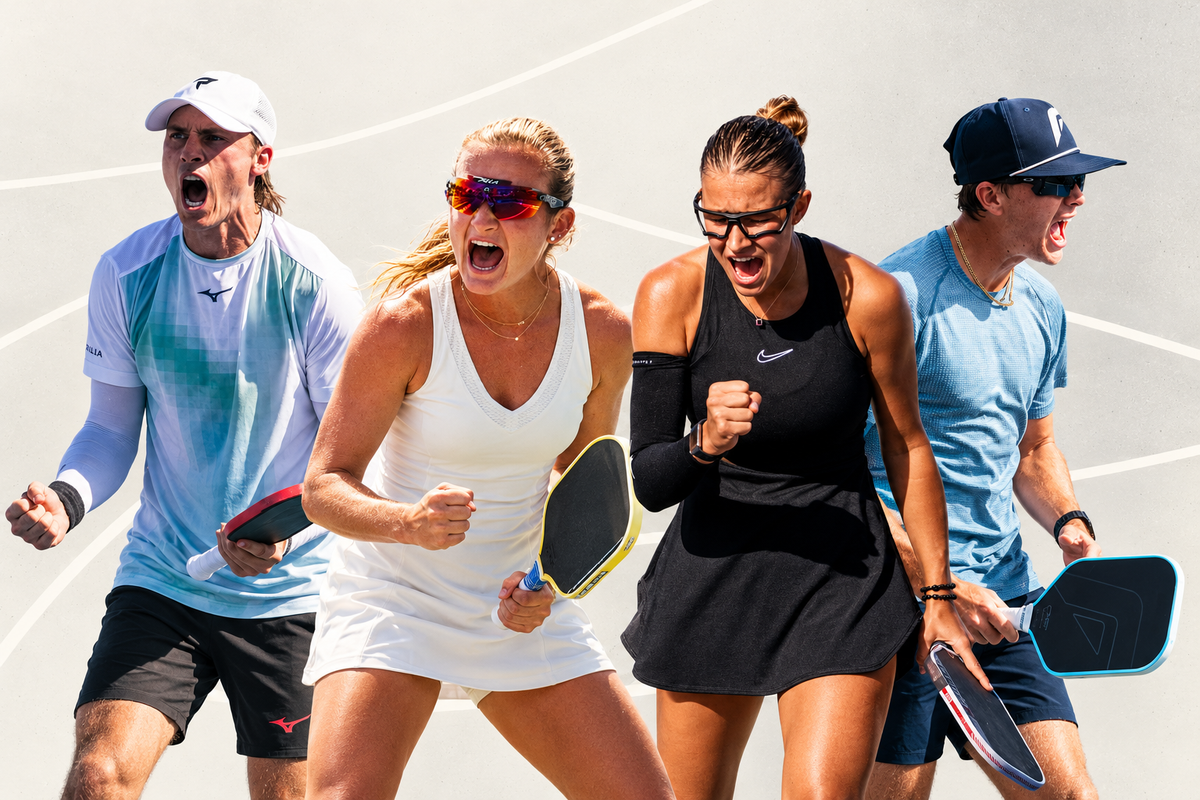
The controversy over screaming and taunting has divided skilled pickleball. However can the game distinguish aggressive ardour from poor sportsmanship with out silencing its gamers?
Skilled pickleball has a screaming downside.
Or does it?
Over the previous two weeks, some of the polarizing debates in skilled pickleball hasn’t concerned paddle testing, questionable line calls, or the game’s sophisticated skilled panorama.
It has been about screaming.
Extra particularly, whether or not the PPA Tour and Main League Pickleball ought to introduce a rule penalizing gamers for extreme celebrations and taunting.
Some imagine the game wants clearer behavioral boundaries. Others argue that emotion, trash discuss, and controversy are precisely what skilled pickleball must develop.
I imagine there is a affordable center floor, however I am not satisfied one other rule is the reply.
The Match That Began It All
The controversy started on the PPA Chicago Cup when Maria Ford defeated former tennis star and present No. 16-ranked girls’s singles participant Genie Bouchard.
All through the second and third video games, Ford repeatedly screamed following factors. Bouchard grew visibly annoyed and in the end walked off with out tapping paddles after the match.
Clips circulated throughout social media, producing hundreds of feedback debating whether or not Ford’s celebrations crossed the road.
On October 14, fellow pickleball journalist Jim Kloss revealed an article titled The Time Has Come for PPA to Undertake an Anti-Taunting Rule.
Kloss proposed giving referees the authority to penalize extreme screaming and intimidating gestures primarily based on elements together with frequency, quantity, whether or not the conduct was directed at opponents, and whether or not it adopted an opponent’s mistake.
His proposal included warnings adopted by escalating penalties.
He particularly talked about Ford and Kate Fahey as examples of problematic conduct whereas distinguishing their celebrations from Anna Leigh Waters’ occasional vocal encouragement.
That is the place I feel his argument begins to disintegrate.
The Gamers Push Again
Anna Vivid was among the many most outspoken critics of the proposal, suggesting that anybody eager to remove screaming ought to go watch paint dry.
Kate Fahey raised a special concern: Why are girls being criticized for screaming whereas males frequently interact in aggressive trash discuss on the kitchen line?
@pickleball_jim Recognize the quilt photograph, Jim. However for those who’re going to name me out for yelling however not the boys who make it some extent to trash discuss on the internet on to their opponents, that’s “disingenuous”
— Kate Fahey (@katefahey6) October 14, 2026
It is a official problem – why are girls who have a good time by screaming being focused, moderately than the boys within the sport who hurl insults at one another throughout the online?
On the similar Chicago Cup, Hayden Patriquin and Eric Oncins exchanged heated phrases throughout males’s doubles, with Patriquin acknowledging that he insulted Oncins. And it wasn’t the primary time Patriquin’s trash discuss had generated controversy.
But Ford’s wordless screaming grew to become the catalyst for a proposed rule change.
If we will police conduct, the requirements should apply equally to everybody.
Zane Navratil took the argument even additional.
Within the video above, Navratil argued that athletes must be allowed to scream and even taunt opponents as a result of controversy creates leisure.
He pointed to the NFL’s unpopular taunting restrictions and the UFC’s success constructing personalities by way of trash discuss.
Navratil additionally acknowledged regretting his personal aggressive screaming incident throughout MLP competitors, whereas recognizing that it generated appreciable consideration.
I do not agree that leisure worth ought to excuse each kind of conduct. However Navratil makes an vital level.
Skilled pickleball continues to be combating for viewers, sponsorship {dollars}, and mainstream recognition.
Do we actually wish to discourage the personalities that make individuals watch?
The place Do We Draw the Line?
Here is my largest problem with the proposed rule.
How do you objectively decide when a celebration turns into extreme?
If a participant screams after successful a spectacular 40-shot rally, is that acceptable? What about after a routine winner? Or 5 consecutive factors? At what level does celebrating grow to be a punishable offense?
Throughout The PicklePod’s October 20 dialogue, Nico the Lefty questioned how referees may persistently implement restrictions primarily based on quantity and frequency.
I agree fully.
We have already got sufficient controversies surrounding officiating. The very last thing we want is one other subjective judgment that might affect the result of a championship match.
However I additionally imagine there is a clear distinction between celebrating your self and intentionally intimidating another person.
Screaming towards your companion or bench after an vital level? Completely advantageous.
Strolling towards the online and screaming instantly in an opponent’s face? That is totally different.
Repeatedly directing private insults at an opponent? There must be penalties.
The main target must be on conduct meant to intimidate or provoke, not merely how loud or emotional somebody turns into.
Pickleball Wants Personalities, Not Extra Restrictions
Skilled pickleball continues to be growing as a spectator sport.
It wants rivalries. It wants recognizable personalities. And sure, it wants gamers some followers like to hate.
Take into consideration John McEnroe in tennis. His expertise made him nice, however his character made him unforgettable. Followers do not all the time tune in as a result of they love each athlete.
Generally they tune in as a result of they desperately wish to see somebody lose.
Gamers equivalent to Christian Alshon, Hayden Patriquin, Kate Fahey, and others convey emotion and character to skilled pickleball.
Not everybody appreciates their celebrations, which is completely advantageous. We should not require skilled athletes to be universally favored.
Nonetheless, there’s a distinction between embracing aggressive personalities and tolerating conduct that genuinely undermines sportsmanship.
What Can Pickleball Study From Different Sports activities?
Skilled pickleball is not the primary sport to wrestle with taunting.
The NFL has penalized taunting for many years, however its enforcement historical past provides a cautionary story. In 2017, the league relaxed its celebration restrictions, permitting gamers extra freedom to precise themselves whereas retaining penalties for conduct directed at opponents.
In 2021, the NFL renewed its emphasis on taunting, resulting in a number of controversial calls. Probably the most notable concerned Chicago Bears linebacker Cassius Marsh, whose celebration following a sack resulted in a 15-yard penalty that prolonged a Pittsburgh Steelers drive. The NFL defended the decision, but it surely grew to become a major instance of how subjective enforcement can affect video games.
The NBA takes a considerably extra focused method. Its official guidelines require a technical foul for blatant taunting of an opponent, together with sure confrontational gestures and verbal actions. School soccer additionally penalizes taunting, whereas skilled tennis makes use of escalating penalties for abusive and unsportsmanlike conduct.
Here is my takeaway: Different sports activities have proven that you could shield celebrations whereas penalizing conduct directed at opponents. However they’ve additionally proven how shortly subjective officiating can grow to be the larger controversy.
Skilled pickleball ought to study from each classes.
We need not penalize athletes for displaying emotion. We want persistently enforced requirements for conduct that intentionally intimidates, abuses, or provokes opponents.
That is a significantly better place to begin than asking referees to find out when a participant has screamed one too many occasions.
Not everybody agrees. In truth, Kloss has grow to be much more emphatic in his assist for a brand new rule.
Kloss Doubles Down — However Does His Argument Maintain Up?
On October 26, Jim Kloss revealed a follow-up opinion piece, responding on to Zane Navratil and others who criticized his proposal.
Kloss argues that each skilled sport wants behavioral limits, that the NFL continues to implement anti-taunting penalties, and that referees could be skilled to differentiate acceptable celebrations from unsportsmanlike conduct.
I really agree with a lot of that.
However I feel his argument misses an vital distinction.
No one is suggesting skilled pickleball ought to enable combating, threatening conduct, or unrestricted verbal abuse. These are basically totally different from a participant screaming after successful some extent.
Kloss additionally argues that gamers equivalent to Ben Johns and Anna Leigh Waters show that skilled pickleball could be entertaining with out taunting.
In fact it might. However no person is suggesting in any other case.
Nice competitors and compelling personalities aren’t mutually unique.
The place I disagree most is his confidence that referees can persistently decide when screaming turns into extreme. Sure, officers make subjective calls in each sport. That does not imply we must always introduce extra subjective requirements until they’re needed.
Kloss factors to the NFL’s decades-long enforcement of taunting penalties as proof that skilled pickleball ought to comply with swimsuit. However the existence of a rule does not routinely show that it is efficient, persistently enforced, or acceptable for one more sport. And the NFL’s personal historical past demonstrates simply how controversial these judgment calls can grow to be.
Kloss is totally proper that skilled sports activities want boundaries. However establishing that boundaries are needed does not routinely imply his proposed rule is the suitable answer.
The burden must be on these proposing new penalties to show what present guidelines can’t deal with, not merely to determine that some followers discover screaming annoying.
Here is my largest problem with Kloss’s proposal: Why ought to the frequency or quantity of a celebration assist decide whether or not it is unsportsmanlike? A participant screaming after 5 consecutive factors is not essentially behaving worse than somebody screaming as soon as. The intent and path of that conduct ought to carry way more weight than how usually or how loudly it happens. In any other case, we’re probably penalizing athletes for being persistently emotional moderately than genuinely unsportsmanlike.
My Take: Implement Sportsmanship, Do not Regulate Emotion
After contemplating each of Jim Kloss’s articles and analyzing how different skilled sports activities deal with taunting, I am nonetheless not satisfied pickleball wants a sweeping new rule concentrating on extreme screaming.
I agree with Kloss that skilled sports activities want behavioral boundaries. The place we disagree is how these boundaries must be outlined and enforced.
The UPA ought to first decide whether or not its present guidelines adequately deal with deliberate intimidation, threatening conduct, and verbal abuse. If they do not, make clear these provisions.
However do not create a rule that probably penalizes gamers just because they have a good time too loudly or too ceaselessly.
And no matter requirements are established should apply equally to women and men, superstars and lesser-known professionals, championship courts and out of doors courts.
I additionally agree that skilled athletes affect youthful gamers. However being a job mannequin does not imply suppressing each emotional response. Younger gamers ought to study that celebrating success is suitable whereas intentionally disrespecting opponents shouldn’t be.
The true problem for the UPA is not determining make pickleball quieter. It is figuring out which behaviors genuinely cross the road and which merely make sure gamers unpopular.
And till that distinction is clearly established, one other subjective rule could create extra issues than it solves.
Skilled pickleball does not want fewer personalities. It wants clearer boundaries.
