
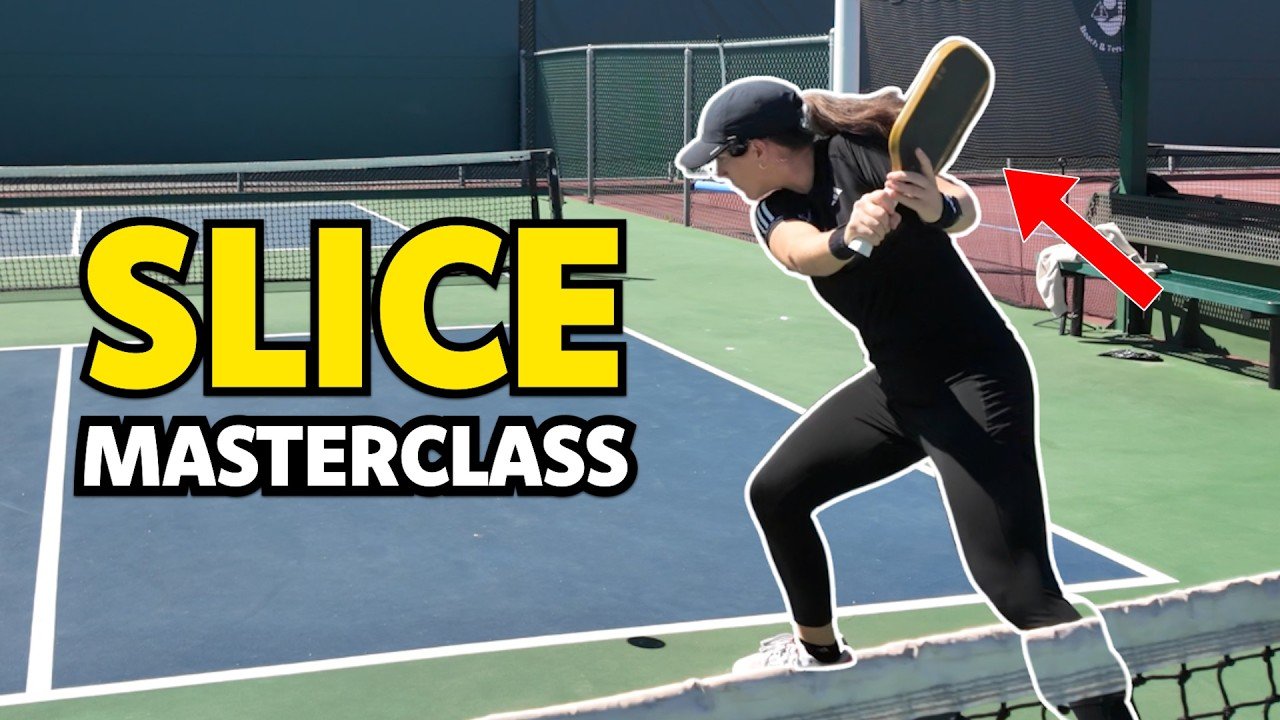
Most gamers assume a slice return wants an enormous wrist snap. Mari Humberg’s 6.042 DUPR slice return proves the alternative, and here is precisely how she does it.
Your slice return floats. It sits up. The opponent walks in and drives it proper again at your ft earlier than you’ll be able to even take into consideration the kitchen.
The issue nearly by no means comes from lack of effort. It comes from three or 4 particular technical errors that gamers repeat each single time they attempt to slice.
This breakdown comes from Ed Ju on YouTube, who spent a session working instantly with skilled participant Mari Humberg, rated 6.042 DUPR, to interrupt down precisely how she generates a lot slice with so little seen effort.
Love pickleball? You then’ll love our free e-newsletter. We ship the newest information, suggestions, and highlights totally free every week.
What Truly Makes a Slice Return Work?
A slice return works when the ball skids low off the bounce, stays deep, and pins the server again earlier than they’ll assault.
Mari Humberg does all three of these issues constantly as a result of she has been slicing since she was seven years outdated, ranging from a tennis background.
However here’s what issues for you: each precept she makes use of will be taught and repeated.
You don’t want twenty years of reps to start out hitting a greater slice return immediately.
The idea is easy. Slice, additionally referred to as underspin, means the ball spins backwards because it travels.
Topspin spins ahead and kicks up off the bounce. Slice spins backward and stays low, typically skidding nearly flat off the court docket floor.
That low skid is strictly why the slice return is such a robust weapon.
Your opponent has to cope with a ball rising from beneath the web, which makes it very laborious to assault aggressively.
What Grip Ought to You Use for a Slice Return?
Grip is the place to begin. Humberg performs nearly each shot in pickleball with a grip that sits between continental and japanese.
Continental is the basic handshake grip. You shake fingers with the paddle and that’s continental.
From there, Humberg shifts simply barely towards japanese, rotating the paddle a contact clockwise in her hand.
For the slice return particularly, she stays proper in that very same vary. In case you are already utilizing a continental grip, you might be shut sufficient to start out.
Something between continental and japanese offers you the paddle angle you want.
Another element value noting: Humberg now chokes up on the deal with.
She moved her grip up on the deal with about six months earlier than filming this session to assist her two-handed backhand, and he or she has not gone again.
It isn’t required for slicing, nevertheless it reveals how grip choices have an effect on each shot you hit.
💡
Why Are You Utilizing Too A lot Wrist?
That is the error that kills most slice returns earlier than they even begin. Gamers see professionals hit heavy slice and assume the wrist is doing all of the work. It isn’t.
Wrist provides variability. Variability means inconsistency.
In case you are new to slicing or don’t come from a tennis background, including further wrist movement makes the shot more durable to manage, not simpler.
Humberg is direct about this: take the wrist out.
The slice spin comes from two issues as a substitute, the open paddle face and the course of the swing path. Not from flicking on the ball.
If you would like extra spin, open the paddle face extra. If you would like extra depth, lengthen your swing ahead.
Neither of these changes requires your wrist to do something dramatic.
Ed was making the wrist mistake through the session. Humberg identified that he missed extra balls when he added wrist, and never coincidentally.
The repair was quick when he stopped attempting to snap by way of the ball and began guiding it as a substitute.
In the event you preserve struggling together with your return going lengthy, extra wrist is nearly all the time a part of the issue.
Strengthen Wrists for Pickleball: 6 Key Workouts
If you wish to strengthen wrists for pickleball, you want extra than simply court docket time, you want focused workouts that defend your tendons and forearm muscular tissues from repetitive stress. These 6 strikes construct the wrist stability and resilience each critical participant wants.
The Paddle Path That Generates Actual Slice
Right here is the mechanical core of the shot. For topspin, you swing low to excessive, brushing up the again of the ball. For slice, you do the alternative.
You narrow throughout and just below the ball, transferring ahead and barely downward.
Humberg describes the angle as about one diploma downward from straight ahead. That’s barely any downward angle in any respect.
The paddle face is open, and you might be pushing by way of the ball, not chopping down on it.
The phrase “chopping” is essential right here. Chopping means a steep downward swing that kills your depth and management.
Pushing means a compact, ahead swing with an open face that creates underspin naturally.
The ball doesn’t go up as a result of you aren’t swinging low to excessive. It travels ahead with slice as a result of the face angle and course work collectively.
Consider it as a push with a barely tilted paddle relatively than a chop or a swipe. That psychological picture will repair extra issues than any technical description.
The exception is when the ball is sitting up excessive. If a serve bounces up into your strike zone, you’ll be able to swing downward extra aggressively.
That’s how Humberg generates a heavier slice on excessive balls, and it is usually how she hits the drop shot model of this system.
However for the standard return of serve, keep near flat and ahead.
Topspin Pickleball Approach: Brush Angle & Paddle Path
Topspin pickleball method is constructed on two fundamentals: a steep brush angle and a low-to-high paddle path. Nail each, and also you’ll hit photographs that land deep, kick excessive, and pressure your opponents into uncomfortable defensive positions.

Contact level is every part. Humberg needs you hitting the ball out in entrance of your physique, not close to your hip or at your aspect.
When Ed made contact too near his physique through the drill, the ball had no tempo and no spin. The shot died instantly.
When he prolonged and hit the ball additional out in entrance, the slice sharpened and the depth got here with it.
That is particularly essential on the backhand aspect. You can not generate a clear slice backhand if the ball is already previous you.
Get to it early and hit it whereas it’s nonetheless out forward of your lead hip.
Pickleball Drive Spin: The Contact Level Repair That Works
Most gamers lose pickleball drive spin as a result of they make contact too near their physique. Transfer your contact level to your entrance leg and you’ll really feel the distinction instantly.
Find out how to Add Tempo With out Swinging More durable
This is likely one of the most helpful issues Humberg teaches within the session. On most photographs, you add tempo by swinging more durable.
On the slice return, you add tempo by attacking together with your physique.
She describes it as tackling the ball. You progress into the shot together with your entire physique relatively than simply swinging your arm quicker. The swing stays compact.
Your physique does the work.
Ed tried so as to add tempo by growing his arm swing and the shot bought sloppy. When he moved into the ball as a substitute, the tempo jumped and the slice bought sharper.
Grip stress and physique mechanics working collectively is what separates a weak slice from a biting one.
The return of serve is an ideal place to use this. Begin additional again than normal. Because the ball bounces, transfer ahead into it aggressively.
Hit it compact, hit it out in entrance, and let your momentum do the heavy lifting.
How Early Preparation Buys Time & Slows Down Tempo of Play in Pickleball
While you’re ready early, you’re not rushed. While you’re not rushed, you make higher choices. While you make higher choices, you win extra factors.
Drilling the Slice Return the Proper Means
Humberg recommends hand feeding as one of the best ways to be taught the slice, both with a accomplice or by tossing to your self.
Right here is why: once you hand feed, there isn’t any incoming tempo to depend on. It’s important to generate every part your self.
That forces you to be taught the proper mechanics as a substitute of simply redirecting another person’s energy.
As soon as you’ll be able to hand feed a clear slice, returning a serve turns into a lot simpler as a result of the serve offers you tempo to work with.
Use this development once you apply:
- Hand feed to your self, forehand aspect first, focusing solely on an open paddle face and a ahead swing path
- Have a accomplice hand feed from about ten ft away, nonetheless forehand
- Repeat each steps on the backhand aspect
- Transfer to dwell serves at half tempo, holding the swing compact
- Add full tempo serves and concentrate on transferring into the ball together with your physique
Don’t rush to step 4. The hand feed drill exposes each technical mistake quick. In case you are chopping, you will notice it instantly as a result of the ball will die brief.
In case you are utilizing an excessive amount of wrist, you’ll miss greater than you make.
Structured drills like this are how gamers transfer from 3.0 to five.0, and the slice is likely one of the quickest photographs to sharpen when practiced deliberately.
5 Pickleball Drills That Will Remodel Your Recreation in 2026
5 easy but highly effective pickleball drills can utterly reshape the way you play. These mechanics concentrate on consistency, footwork, and positioning that can assist you see quick outcomes on the court docket.
Why the Slice Return Is Tactically Harmful
The slice return is not only a impartial shot. Used accurately, it’s an offensive weapon that places the server at an actual drawback.
Here’s what the server faces once you hit a high quality slice return:
- A ball that stays low after the bounce, making it laborious to drive aggressively
- A ball with heavy backspin that reacts in another way off the paddle than a flat or topspin shot
- You already transferring towards the kitchen as a result of your physique attacked the ball on the way in which ahead
- Depth that pins them on the baseline and limits their third shot choices
Humberg demonstrated this within the session by returning full energy serves from Ed and sending the ball again deep and low whereas concurrently arriving on the kitchen line.
Ed’s personal energy labored towards him as a result of the slice absorbed and redirected it.
In the event you wrestle towards massive servers, the slice return is likely one of the finest instruments out there to you.
Gamers who depend on positioning relatively than uncooked athleticism particularly profit from it as a result of the shot requires method and timing, not velocity.
The slice additionally units up the third shot drop battle in your favor.
In case your return is low and deep with backspin, the server’s third shot turns into a lot more durable to hit clear.
Placement issues on the third shot, and an excellent slice return removes a number of of their finest choices earlier than they even swing.
Another factor value figuring out. The identical mechanics that make a slice return work additionally apply to slice drops, transition slices, and even slice dinks.
Humberg makes use of the identical grip and the identical open face ahead path on all of them.
So each rep you set into your slice return can also be bettering a number of different photographs on the similar time.
That’s an environment friendly strategy to apply, and it’s why centered technical work raises your DUPR quicker than simply taking part in extra video games.
💡
Continuously Requested Questions
What grip ought to I exploit for a pickleball slice return?
Use a grip between continental and japanese for the perfect slice return outcomes. Continental is the handshake grip, and also you shift simply barely clockwise from there. Anyplace in that vary offers you the paddle angle wanted to chop beneath the ball cleanly.
Do I would like to make use of my wrist to generate slice in pickleball?
No, wrist is definitely the primary factor that makes slice returns inconsistent. Mari Humberg generates heavy slice with an open paddle face and a ahead swing path, no wrist snap required. If you would like extra spin, open the face extra relatively than including wrist movement.
Why does my slice return float as a substitute of staying low?
A floating slice return often means you might be chopping down as a substitute of pushing ahead. The paddle path ought to go ahead and solely barely downward, not steeply down. Open your paddle face and take into consideration pushing by way of the ball relatively than chopping beneath it.
How do I add tempo to a slice return with out shedding management?
Transfer your physique into the ball as a substitute of swinging your arm more durable. Humberg calls it tackling the ball: you begin again, transfer ahead aggressively into the shot, and preserve the arm swing compact. Your momentum provides tempo with out including variability.
Can I hit a slice return on each forehand and backhand sides?
Sure, the mechanics are the identical on either side. Open paddle face, ahead swing path, contact out in entrance of your physique, and physique transferring into the shot. Humberg makes use of the identical grip and method on forehand and backhand slice returns.
