
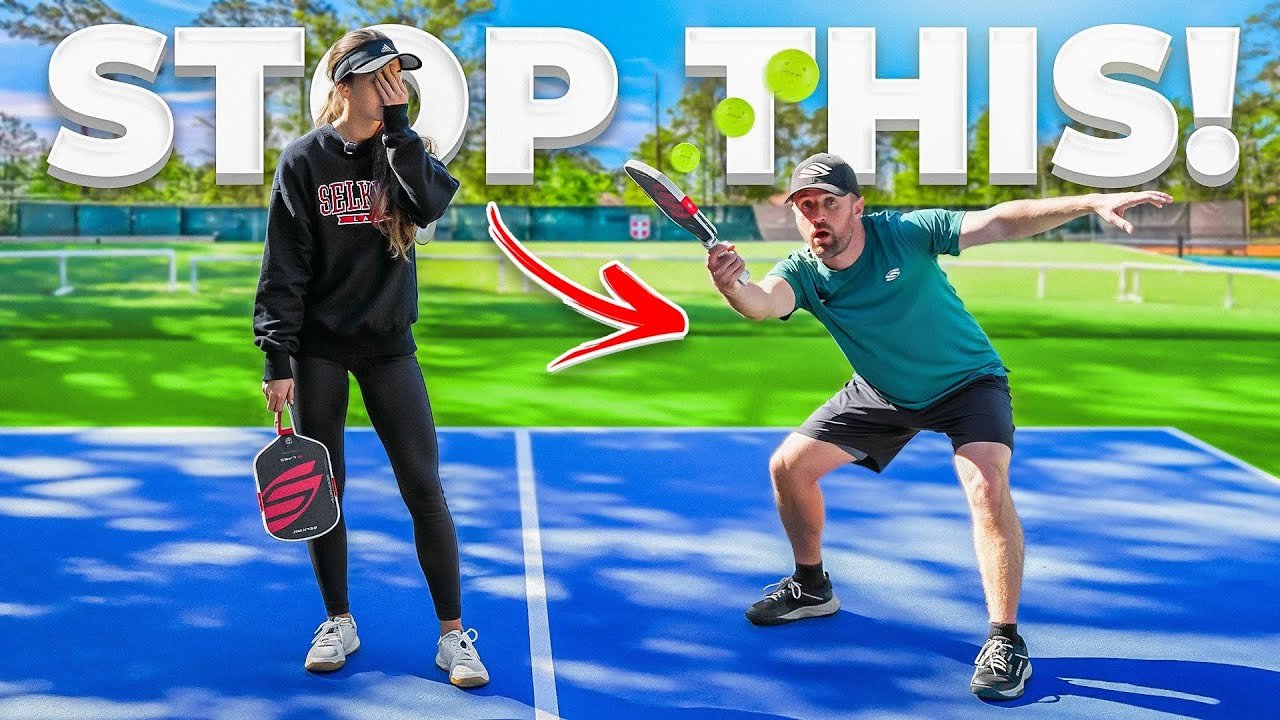
Smooth grip, planted ft, early preparation, and smarter resets — the 4 fixes that preserve the ball down and the purpose rolling on
Popping the ball up in pickleball is a kind of irritating errors that may flip a rally in your opponent’s favor in a heartbeat.
Whether or not you are dinking on the kitchen line or resetting in transition, a floaty ball is principally an invite to finish the purpose rapidly, and never in your favor.
PlayPickleball.com breaks down 4 sensible fixes that work throughout totally different court docket positions, and so they’re price mastering if you wish to preserve your photographs low and unattackable.
Love pickleball? Then you definately’ll love our free e-newsletter. We ship the most recent information, suggestions, and highlights at no cost every week.
1. Grasp Smooth Arms and Dwell Time on the Kitchen Line
The most important wrongdoer behind pop-ups on the kitchen line is slapping the ball. If you slap, you are creating fast acceleration with a wristy movement, which suggests you are reacting reasonably than controlling. Good dinkers do two issues rather well: they preserve tender grip energy, and so they perceive dwell time.
Consider grip energy on a scale from one to 10. A ten is when your veins are coming out of your arm. A one is so free the paddle falls out of your hand. For tender arms and management, purpose for a 3 or 4. That tender grip allows you to really feel the ball and preserve it in your paddle longer.
Dwell time is the idea of carrying the ball in your paddle as a substitute of simply hitting by it. When you could have dwell time, it feels such as you’re hitting a number of balls and guiding each to the subsequent spot. That contact time provides you far more management and retains the ball from popping up.
2. Catch and Stick: The Reset Secret
If you’re in transition and attempting to reset the ball, there is a easy drill that adjustments every little thing. Set your paddle down and observe catching the ball with tender arms, then stick it with out transferring your arms ahead. When you get the texture for that, do the identical factor along with your paddle in hand.
The secret is to catch the ball out entrance and preserve your paddle nonetheless. Do not transfer ahead. Let the ball do the work. In case your opponent hits it sluggish, you’ll be able to all the time add tempo on the subsequent shot. But when they’re hitting sluggish, you’ve got received choices to assault from that place anyway. This system retains your reset low and within the kitchen as a substitute of floating up for a simple put-away.
Evaluating Life Time and Franklin Pickleballs in Gradual Movement
“The Lifetime Professional 48 stood out instantly. It snapped again right into a spherical form very quick, virtually earlier than it even left the cinder block.”
3. Get There Early and Plant Your Toes
A number of pop-ups occur as a result of gamers are late to the ball and nonetheless transferring after they make contact. If you’re transferring and hitting on the identical time, there’s an excessive amount of further movement occurring. The most effective dinkers within the sport are already set with their ft and paddle face earlier than they hit the shot.
This is a sensible tip: by the point you see the ball coming over the web, resolve whether or not you are hitting a forehand or backhand. A number of newbies hesitate on this alternative, which throws off their footwork and positioning. When you decide to your shot sort, convey your paddle there and ensure the ball stays in entrance of your physique. Plant your ft earlier than you hit. You will seem like a freeze body proper earlier than contact, then execute a managed shot. That setup is what retains dinks from popping up.
6 Newbie Pickleball Errors That Make You Look (and Play) Like a Newbie
Pickleball is all about timing and positioning – repair these widespread errors and also you’ll cease trying like an beginner and begin enjoying like a professional

4. Keep away from the Brief Hop Lure
On defensive photographs like drops and dinks, keep away from hitting off the brief hop at any time when attainable. As a substitute, let the ball descend and fall into your paddle. Give your self area and time. In the event you rush and take the ball off the brief hop, you are hitting it because it’s arising, which limits what you are able to do with it.
There are exceptions. In the event you’re in transition and simply attempting to reset defensively, or in the event you’re off stability and must get the ball again, hitting off the brief hop is ok. However as a common rule, persistence pays off.
If you’re driving the ball, the strategy is barely totally different. You wish to catch it on its approach up, however not proper after the brief hop. Let it journey up a bit extra so you’ll be able to hit it close to its highest level. In the event you drive off the brief hop, you danger popping it up or hitting it into the web. Whether or not you are dropping or driving, the precept is similar: keep away from the brief hop and provides your self time to make strong contact.
Heads up: tons of of 1000’s of pickleballers learn our free e-newsletter. Subscribe right here for innovative technique, insider information, professional evaluation, the most recent product improvements and extra.
These 4 fixes tackle the commonest causes of balls popping up throughout the court docket. Smooth grip energy and dwell time on the line, the catch-and-stick reset in transition, early preparation and planted ft, and avoiding the brief hop all work collectively to maintain your photographs low and in management. Begin with whichever space provides you probably the most bother, and you will discover the distinction fairly rapidly.
